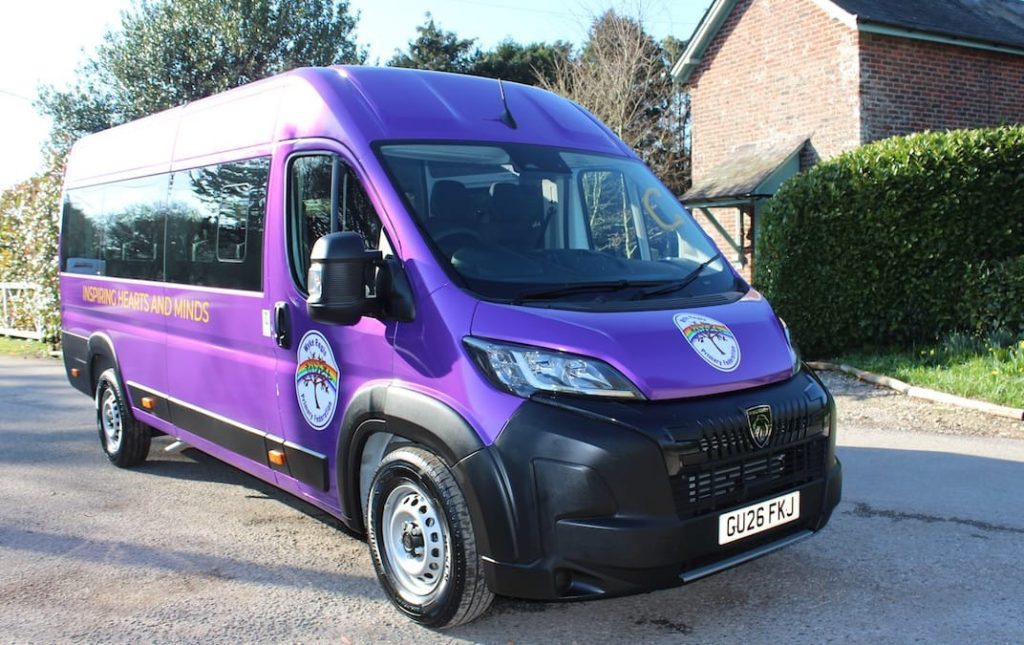
If you’ve been looking into school transport options, chances are you’ve come across the terms minibus leasing and contract hire sometimes used interchangeably, often with very little explanation of what they actually involve. This guide cuts through the confusion so you can decide whether leasing is the right route for your school or organisation.
What Is Minibus Leasing?
Minibus leasing, or contract hire as it’s formally known, is an agreement where you pay a fixed monthly amount to use a minibus for an agreed period, typically two to five years. At the end of the contract, you simply hand the vehicle back. There’s no large final payment, no depreciation risk, and no need to worry about selling an ageing vehicle.
Think of it less like buying and more like having full access to a minibus without the headaches of ownership.
What’s Included in a Minibus Lease?
This varies between providers, but a well-structured contract hire agreement from a specialist like Red Kite typically covers:
- Routine maintenance and servicing — your vehicle is serviced at the manufacturer’s recommended intervals, keeping it safe, legal, and under warranty without unexpected repair bills landing on your desk.
- Road Fund Licence — your road tax is renewed on your behalf throughout the contract.
- Breakdown cover — depending on the vehicle make, this includes manufacturer-backed cover such as RAC assistance for Ford vehicles and Peugeot’s Lioncare AA cover. Extended breakdown cover beyond the manufacturer’s period is also available.
- Class 5 MOT support — you’ll receive reminders ahead of your annual MOT, timed wherever possible to coincide with your scheduled service visit.
- Mileage flexibility — your annual mileage allowance is agreed upfront and can be tailored to reflect how your routes actually look, avoiding unnecessary cost.
Lease vs Buy: What’s the Practical Difference?
Buying a minibus outright means a large capital outlay — typically £30,000–£60,000 for a new school-spec vehicle — plus the ongoing cost of servicing, repairs, tyres, MOTs, and eventual resale at a depreciated value. It ties up budget that many schools and charities simply don’t have.
Leasing flips this model. Your costs become fixed and predictable from day one. You know exactly what you’re paying each month, which makes budgeting straightforward whether you’re working to a local authority allocation, a trust budget, or a charitable fund.
There are also potential tax advantages worth discussing with your finance team. Many organisations can reclaim VAT on lease payments or offset them against taxable profits, depending on the structure of the agreement and how the vehicle is used.
Who Is Minibus Leasing Best Suited For?
Contract hire tends to be a good fit if any of the following apply:
- You need a new, reliable vehicle but can’t justify a large capital spend
- Predictable monthly costs matter more than eventual ownership
- Your vehicle will cover significant mileage and you’d rather not carry depreciation risk
- You want maintenance included so your bursar, facilities manager, or business manager isn’t fielding repair invoices
- You’re a school, academy, multi-academy trust, charity, or care provider – all sectors where cash flow and auditability of spend matter
Leasing is generally less attractive if you need maximum flexibility to change or modify the vehicle, plan to use it lightly, or if capital purchase is genuinely cost-effective for your specific situation.
What Are Your Responsibilities Under a Lease?
It’s important to go into a contract hire agreement with a clear picture of what remains your responsibility. Typically, this includes:
- Arranging fully comprehensive insurance for the vehicle throughout the contract
- Fuel costs
- Tyres (and batteries) — replacements are subject to fair wear and tear provisions
- Accident damage, including windscreens and door mirrors
- Any traffic offences or parking fines incurred
- Ensuring the vehicle is returned in good condition at the end of the contract
Red Kite carries out vehicle condition assessments during the contract — usually at routine service visits — so there are no surprises when it’s time to hand back.
How Does the End of Contract Work?
When your agreement ends, you return the vehicle to Red Kite. Provided it’s within the agreed mileage and in acceptable condition (fair wear and tear is expected), there’s nothing further to pay. No balloon payment, no haggling over trade-in value — you simply hand back the keys and, if you need to, arrange your next vehicle.
If you’ve exceeded the contracted mileage, an excess mileage charge applies at a rate agreed at the start of the contract — so it’s never a surprise.
How Long Are Minibus Lease Contracts?
Most school minibus contract hire agreements run for two to five years. A longer contract typically means a lower monthly payment; a shorter contract gives you more flexibility to change to a different vehicle as your needs evolve. Red Kite will help you find the right balance for your situation.
Is Minibus Leasing Right for Your School?
For most schools and education trusts, the answer is yes — and it’s why contract hire has become the dominant model for school transport procurement over the past decade. Fixed costs, no large upfront spend, a well-maintained vehicle, and a specialist on hand to manage the logistics makes it an easy case to put in front of a finance committee.
Red Kite Vehicle Consultants have been supplying and leasing school minibuses for over 30 years. We work with schools, academies, multi-academy trusts, colleges, and special educational needs providers across the UK — so whatever your situation, we’ve almost certainly seen it before.
Ready to explore your options? Visit our school minibus leasing page for more information, or call us on
01202 827678 to talk through your requirements.